Vous révisez le début. C’est mieux, mais le problème n’a pas disparu. Vous restructurez la partie centrale. Le rythme s’améliore, mais quelque chose continue de clocher. Vous l’envoyez à un lecteur de confiance, qui aime le texte, mais la remarque précise qu’il vous fait ne saisit pas tout à fait ce que vous ressentiez depuis un moment. Vous repartez du début.
C’est l’un des moments les plus épuisants d’un projet d’écriture, car l’effort est bien réel, mais les progrès sont difficiles à percevoir.
Ce que « ne pas fonctionner » signifie généralement
D’après mon expérience de l’édition de manuscrits que les auteurs décrivent ainsi, ce qui « ne fonctionne pas » n’est presque jamais ce que l’auteur croit.
Les auteurs ont tendance à percevoir un problème à l’endroit où il fait surface — le chapitre qui semble plat, la scène qui ne prend pas, la fin qui ne satisfait pas. Mais ce n’est souvent pas là que réside le problème. Un chapitre plat au milieu d’un livre est fréquemment le symptôme de quelque chose de structurel mis en place plus tôt : un personnage dont la motivation n’a pas été établie assez clairement, un rebondissement survenu trop vite ou trop lentement, une question narrative soulevée dans le premier acte puis discrètement abandonnée.
Corriger le chapitre plat ne règle rien, car le problème se situe en amont. Vous pouvez réécrire dix fois la même scène, elle restera légèrement plate, parce que le problème n’est pas la scène elle-même.
C’est en partie ce qui rend si difficile le diagnostic de son propre manuscrit de l’intérieur. Vous pouvez voir que quelque chose ne va pas. Vous êtes moins susceptible de voir où cela prend réellement sa source, car vous vivez avec les décisions qui en sont à l’origine depuis le moment même où vous les avez prises.
Obtenir une image plus claire
La chose la plus utile à faire à ce stade est d’obtenir une cartographie structurelle du manuscrit tel qu’il existe réellement sur la page — non pas tel que vous l’imaginez, mais tel qu’un lecteur en ferait l’expérience.
Cela signifie examiner des éléments comme : à quel endroit le rythme narratif ralentit-il de façon significative, et est-ce intentionnel ? Où la tension centrale se relâche-t-elle ? Vos arcs de personnages évoluent-ils comme vous le pensez, ou y a-t-il une dérive que vous n’avez pas remarquée ? La voix est-elle cohérente d’un bout à l’autre, ou y a-t-il des passages où elle change d’une manière qui interrompt la lecture ?
Certains de ces éléments, vous pouvez les évaluer vous-même, avec assez de recul. D’autres se voient réellement mieux de l’extérieur.
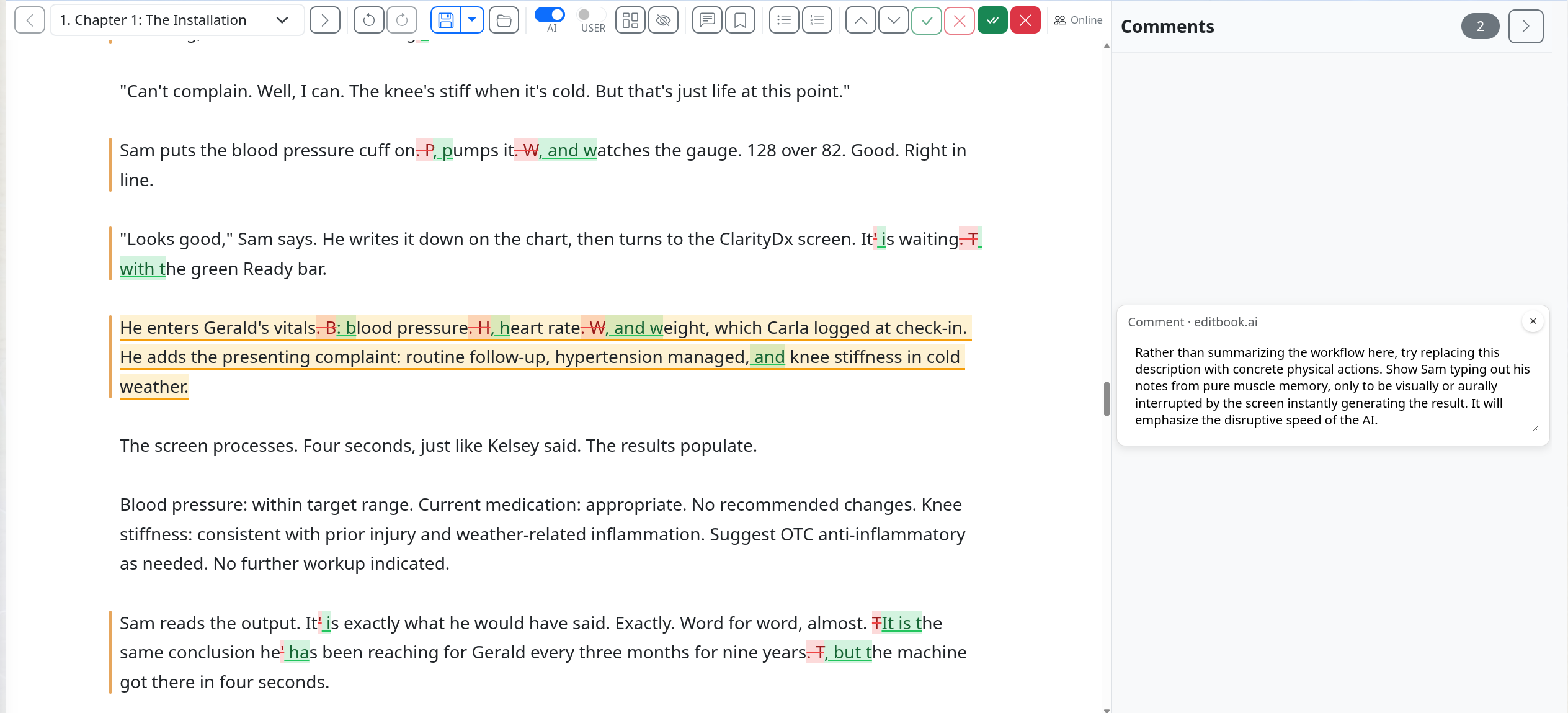
Un retour précis et argumenté — plutôt que des impressions générales — vous aide à comprendre non seulement ce qu’il faut changer, mais aussi pourquoi cela compte.
La différence entre une impression générale et un retour utile
L’une des frustrations lorsqu’on partage un manuscrit difficile avec un lecteur, c’est que les impressions générales, aussi bienveillantes soient-elles, ne sont souvent pas très utiles. « J’ai vraiment aimé, mais quelque chose semblait un peu lent au milieu » vous confirme qu’un problème existe — ce que vous saviez déjà —, mais ne vous donne pas grand-chose à exploiter.
Un retour utile est précis. Il identifie l’endroit où le problème fait surface, propose une hypothèse sur son origine et — si vous avez de la chance — suggère à quoi pourrait ressembler une approche différente. C’est bien plus difficile à fournir, et la plupart des lecteurs, à moins d’avoir une formation éditoriale, ne sont pas en mesure de le faire de façon constante.
C’est là qu’une lecture analytique peut compléter ce que vous apporte un lecteur humain. Elle ne vous dira pas si votre livre est bon, ni si vous devez continuer. Mais elle peut vous offrir une image structurelle qui rend le problème plus facile à voir : un graphique de rythme qui montre exactement où le récit perd de son élan, une analyse de cohérence de la voix qui identifie les passages où le registre change, un résumé de l’arc du personnage qui montre comment votre protagoniste évolue réellement au fil du livre, plutôt que comme vous le pensiez.
Ce type d’information précise et structurelle est souvent ce qui débloque la situation. Non pas parce qu’elle vous dit quoi faire, mais parce qu’elle rend le problème réel suffisamment visible pour que vous puissiez y réfléchir clairement.
Quand prendre du recul
Il existe aussi une version de cette situation où la bonne réponse est de s’éloigner complètement du manuscrit pendant un moment. Non pas l’abandonner — mais cesser de le réviser, cesser d’y penser, et travailler sur autre chose.
Les auteurs résistent souvent à cette idée, car ils sentent que le manuscrit y est presque, et s’arrêter leur donne l’impression de renoncer à cette dernière étape. Mais les manuscrits presque aboutis peuvent vous piéger dans de petites révisions qui ne s’attaquent jamais au problème de fond. Parfois, la seule façon d’y voir clair est d’oublier suffisamment le livre pour pouvoir le lire d’un œil neuf.
Trois mois suffisent généralement. L’histoire cesse d’être aussi vivace dans votre mémoire immédiate. Lorsque vous y revenez, vous la lisez davantage en lecteur et moins comme la personne qui a écrit chaque phrase — et vous découvrirez peut-être que le problème autour duquel vous tourniez depuis un moment est en réalité bien plus simple qu’il ne le paraissait de l’intérieur.
Le module d’analyse d’EditBook peut vous fournir un aperçu structurel de votre manuscrit — rythme, cohérence de la voix, développement des personnages et positionnement sur le marché — ainsi qu’un rapport de retour destiné à l’auteur, avec des suggestions concrètes. Un regard extérieur précieux lorsque vous êtes trop proche du texte pour voir clairement.