
But it can also leave you genuinely uncertain about whether the book has an audience beyond the obvious one. You wrote it for people who know what you know. Would anyone else find their way in?
That question matters more than it might seem, and not just for commercial reasons. It affects how you approach agents, how you frame a submission, and how you think about what the book actually is.
The difference between niche and limited
There’s a distinction worth drawing between a book that’s niche and a book that’s limited. A niche book has a specific, identifiable audience — and within that audience, it has real claims on attention. A limited book has a smaller audience than it could, because something about the way it’s written keeps general readers from finding their way in.
The first is a positioning question. The second is a craft question. And they’re easy to confuse.
A book about grief written for people who’ve lost a parent is niche, in the sense that the experience it draws on is specific. But grief is one of the most universal experiences there is, and a book that handles it with enough honesty and care can reach readers who’ve never lost a parent but recognise something true about loss from a different angle. The niche subject doesn’t limit the audience — if the writing is good enough, it expands it.
A book about the same subject that assumes too much — that uses insider shorthand, that doesn’t earn its emotional moments for a reader coming in cold — may genuinely be limited to the audience it was written for. Not because of the subject, but because of the assumptions built into the writing.
What an outside reader can tell you
The most useful question to ask at this stage isn’t “is my book commercial?” It’s “what does someone who isn’t already my reader get from this?”
That’s a question that’s very hard to answer yourself, because you are already your reader. You know why the specific details matter. You know what the emotional stakes are. You can’t unknow those things when you read your own work.
An outside read — whether from a beta reader, an editor, or an analysis — can tell you where a general reader starts to feel lost, where the pacing slows in ways that an insider might not notice, and where the writing is doing things that would land well beyond the core audience if they were a little more accessible.
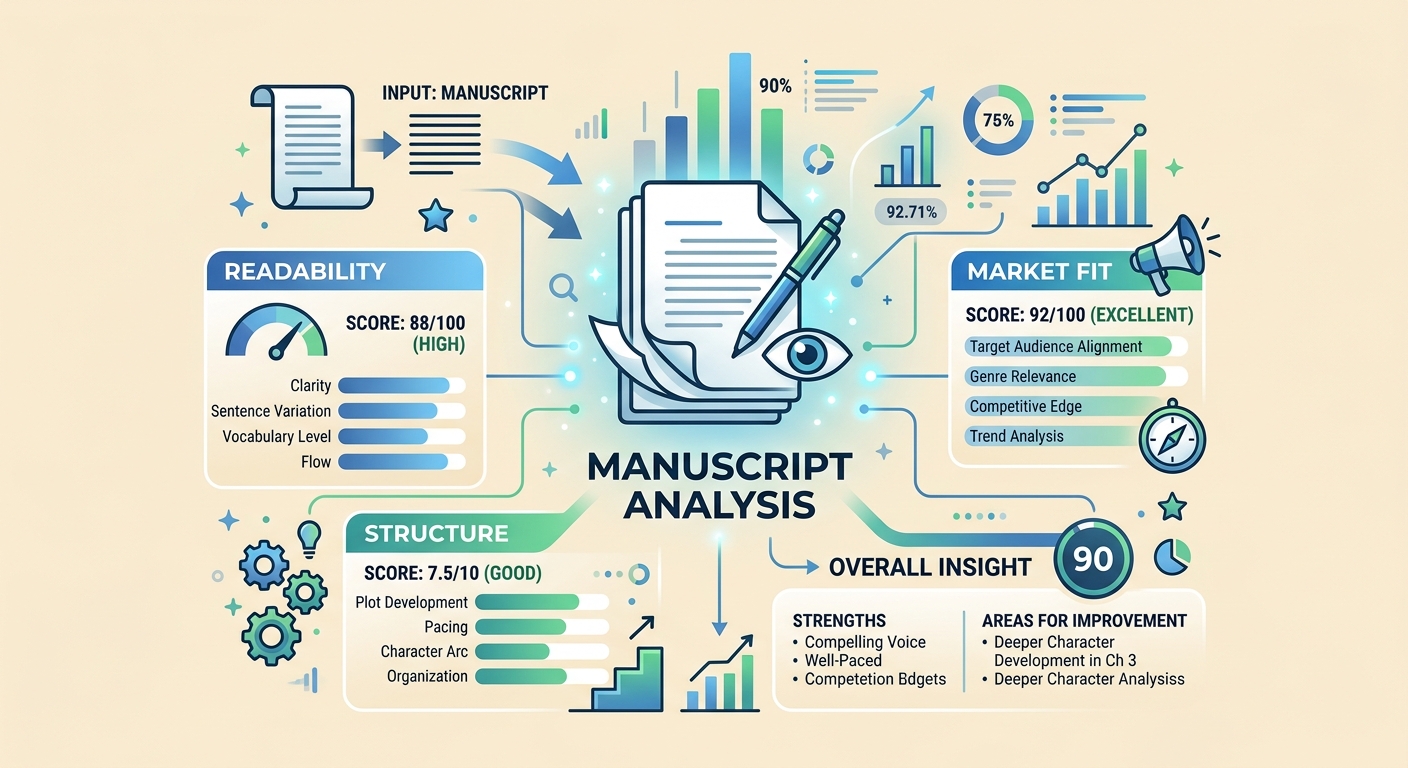
A market analysis looks at how your book positions itself and whether its appeal is likely to extend beyond an obvious core readership.
None of that means flattening the book or writing down to a broader audience. The goal isn’t to make the book generic — it’s to find out whether there’s something keeping readers out that isn’t actually essential to what the book is trying to do.
What this means for how you submit
If your book has a strong niche audience and meaningful broader appeal, that’s something worth articulating clearly in a submission. Agents and publishers don’t need a book to be for everyone — they need to be able to describe who it’s for and why those readers would want it.
“This is a book about X, primarily for readers who Y, but with strong appeal to anyone who Z” is a much more useful framing than either “this is a very specialist book” or “this is for everyone.” The first is honest and specific. The second often sounds like the author hasn’t thought carefully about their readership.
If the analysis suggests that the appeal is genuinely broader than you expected — that the book handles its subject in a way that a general reader can follow and care about — that’s worth knowing before you start pitching. It changes what you lead with.
And if the analysis suggests that there are specific places where the book loses the general reader, that’s also useful. Sometimes a relatively small revision — adding a sentence of context here, pulling back on insider shorthand there — can meaningfully widen the door without changing what the book fundamentally is.
EditBook’s analysis module includes a market and audience assessment that looks at your manuscript’s positioning and likely appeal. The author feedback report explains where the book is strongest and where general readers might need more.